VIETNAM CHAMBER OF COMMERCE AND INDUSTRY
Liên Đoàn Thương Mại Và Công Nghiệp Việt Nam
Wed, Aug 20, 2025, 03:58:00
For example, exports to Japan should not be limited to woodchips and pellets, Man added while speaking at the talk show “20% reciprocal tariff – specific impacts and business responses” held last Saturday in Ho Chi Minh City.
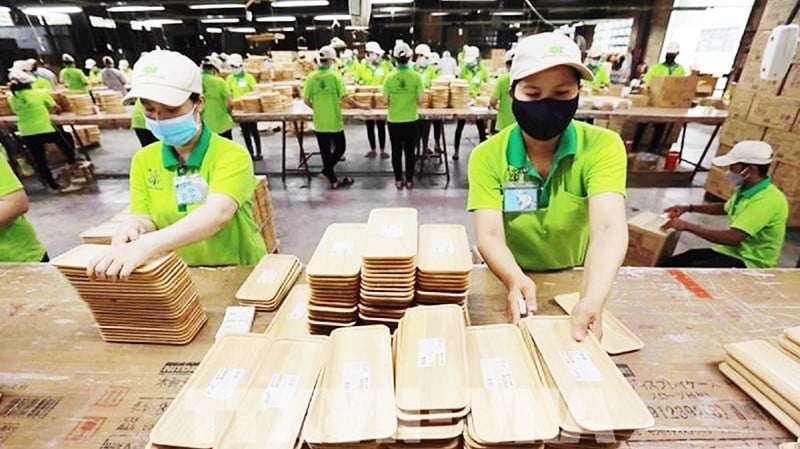
He explained that the industry’s first reaction to the new tariffs was “shock,” with orders declining. However, companies quickly adapted by expediting shipments during the tax grace period.
Since the tariffs took effect, supply chain stability has been maintained by sharing the tax burden among producers, importers, and retailers. As a result, wood exports in the first seven months still grew 7.6%, with shipments to the U.S. up 11.6% - a sign of the industry’s strong resilience.
In the long run, solutions include diversifying markets, improving management capacity, and cutting costs.
To reduce risks, firms will expand their offerings to existing destinations: Japan will import more than just woodchips and pellets, South Korea more than just engineered wood, and Europe more than just outdoor furniture.
Can Van Luc, a member of the Prime Minister’s Economic Advisory Council and chief economist at state-controlled BIDV bank, pointed out that four out of 10 kitchen products in the U.S. now come from Vietnam.
Amid current shifts, many Chinese firms are acquiring Vietnamese wood companies to continue production with the existing workforce, while some major Vietnamese exporters are expanding investments abroad, including in the U.S. and Colombia.
According to the import-export department under the Ministry of Industry and Trade, steady growth in the U.S. market not only reflects a recovery in consumer demand for furniture but also shows how Vietnamese companies are proactively adapting to tariff barriers and increasingly strict buyer requirements.
Vietnam wood industry has good opportunities after tax
Vu Kim Hanh, chairwoman of the High-Quality Vietnamese Goods Business Association, highlighted a golden opportunity for Vietnam’s wood industry following the U.S. decision to impose a 20% reciprocal tariff on Vietnamese wood products.
First, Vietnam’s total global wood exports are worth $17 billion annually, ranking sixth worldwide. In the U.S. market, Vietnam is traditionally the second-largest supplier after China. But in the year to end-July 2025, Vietnam overtook China to claim the No. 1 spot, as Chinese wood shipments are increasingly blocked from entering the U.S.
Second, Hanh emphasized the importance of enhancing the reputation of Vietnam's wood industry. The sector has long carried the stigma of deforestation, she said, but in reality, all Vietnamese wood exports are strictly monitored and must be certified as plantation-grown or legally imported timber.
While tariffs have risen, Vietnam’s top competitor has been sidelined, creating a natural advantage. “But this is not a time to stand still,” Hanh warned. Chinese companies anticipated the trade conflict long ago and have already shifted their trade infrastructure, supply chains, and competitive tools - including marketing and sales - to the U.S.
To maintain its new lead, she argued, Vietnam’s wood export sector must restructure its supply chain to become more rational, agile, and efficient.